
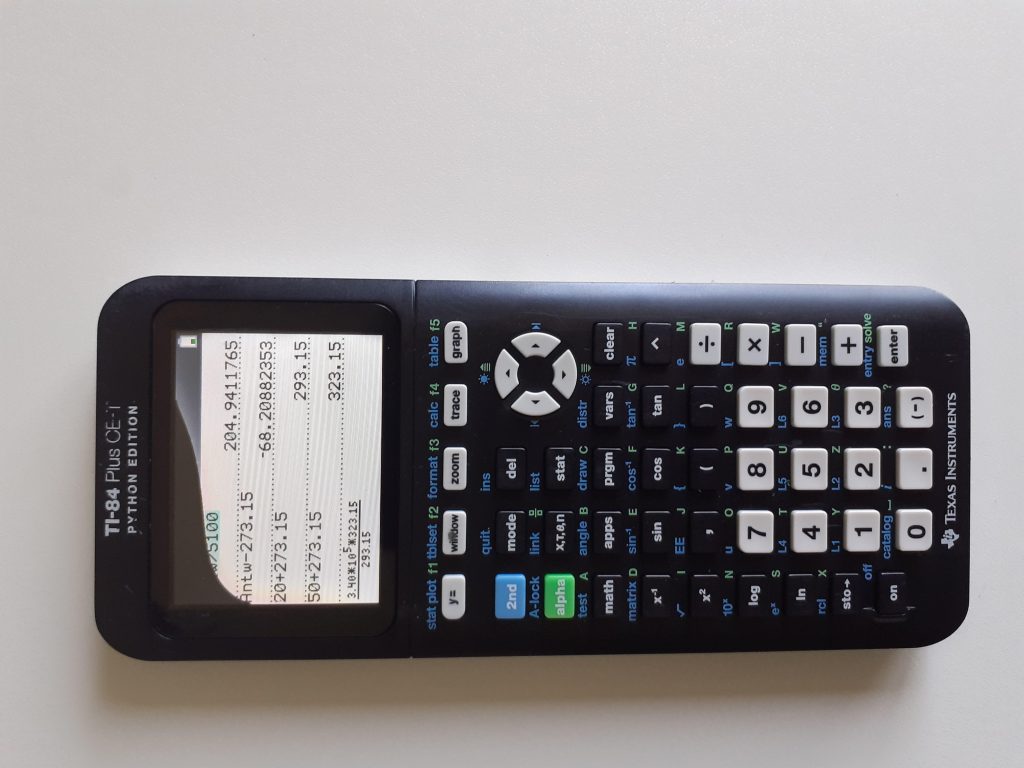
The Texas Instruments TI 84 series has been a cornerstone of high school and college mathematics for over two decades. Millions of students rely on its graphing capabilities, statistical functions, and familiar interface. Yet few experiences are more frustrating than pressing the ON key and being greeted by a completely blank, black, or dimly lit screen when you know the calculator was working perfectly hours or days earlier. A blank screen does not always mean the device is dead. In the overwhelming majority of cases, the problem is reversible and requires no replacement parts.
The Nature of the TI 84 calculator Display Technology
To understand why the screen goes blank, one must first grasp what kind of display the TI 84 actually uses. The TI 84 Plus, TI 84 Plus Silver Edition, TI 84 Plus C Silver Edition, and TI-84 Plus CE employ different screen technologies, and each behaves differently when problems arise.
The monochrome TI 84 Plus and Plus Silver Edition use a passive-matrix LCD with a resolution of 96 × 64 pixels driven by a custom Sharp or Sitronix controller. This screen has no backlight and relies entirely on reflective and transmissive properties combined with ambient light. The later TI 84 Plus C Silver Edition introduced a 320 × 240 pixel colour passive-matrix LCD with an edge-lit LED backlight. The newest TI 84 Plus CE family uses an active-matrix (TFT) colour screen at 320 × 240 with a much brighter and more efficient backlight system.
A “blank” screen on a monochrome model usually appears completely black or extremely faint gray. On the color models, the screen can appear totally black even when the backlight is technically on, or it can appear dark gray with no visible pixels. Understanding which generation you own is the first step in diagnosis.
Battery-Related Blank Screens: The Most Common Culprit
By far the most frequent reason a TI 84 screen goes blank is battery issues. The calculator requires stable voltage within a narrow range, and it is far less tolerant of low or uneven voltage than a smartphone.
Primary AAA Batteries and Voltage Drop
The standard TI 84 Plus uses four AAA alkaline batteries in series, producing a nominal 6.0 V (4 × 1.5 V). The internal regulator steps this down to 3.3 V and lower rails for the CPU and display driver. As soon as the combined voltage falls below approximately 4.7–4.9 V under load, the Z80 processor can continue running, but the LCD driver chip often stops receiving sufficient voltage and the screen blanks out while the calculator is still technically “on.”
Students frequently describe the situation as follows: the calculator works for a few seconds after turning on, then the screen fades to black. This classic symptom almost always indicates marginal batteries. The processor draws spikes of current when executing instructions or refreshing the screen, causing momentary voltage collapse that the LCD driver cannot tolerate.
The Backup Lithium Battery and RAM Clear Phenomenon
Every TI 84 contains a small CR1616 or CR1620 lithium coin cell that maintains the 128 KB (or 256 KB on CE) of archive memory and real-time clock when the main batteries are removed. When this backup cell reaches the end of its life (typically 8–15 years), the calculator performs a RAM clear the next time it boots with fresh AAA batteries. During this RAM clear, the screen intentionally stays blank for 5–30 seconds while the memory test runs. Many users panic and pull the batteries at this exact moment, interrupting the process and leaving the calculator in a corrupted state where it appears permanently blank.
If the backup battery is completely dead and the main batteries are removed for more than a few seconds, the calculator may refuse to boot at all until the backup cell is replaced, even with brand-new alkalines installed.
Rechargeable Battery Packs and Charging Myths
The TI 84 Plus C Silver Edition and early TI 84 Plus CE units shipped with NiMH rechargeable packs and a wall charger. Over time these packs lose capacity and develop high internal resistance. When the pack voltage sags under load, the screen blanks in exactly the same way as with weak alkalines. A common misconception is that plugging the calculator into the charger while turned on will immediately restore the screen. In reality, the charging circuit is extremely slow (≈60 mA) and the calculator continues trying to run from the depleted pack until it reaches ≈4.5 V internally, which can take many minutes.
Contrast Adjustment: The Forgotten Control
On monochrome TI 84 Plus models, contrast is adjusted by pressing 2nd and then the up or down arrow repeatedly. Contrast settings are stored in volatile RAM and reset to a medium value after a RAM clear or battery removal. After replacing batteries, many users see a completely black screen because the contrast has defaulted to maximum (all black. Pressing 2nd and down arrow 15–20 times almost always brings the “Texas Instruments” splash screen and menu back into view. This single step resolves thousands of “dead” calculators every semester.
The color models (C Silver Edition and CE) do not have a user-adjustable contrast setting in the traditional sense, but internal automatic contrast algorithms can become confused after low-voltage events and require a full reset to restore proper pixel drive.
Connection and Ribbon Cable Failures Inside the Case
The LCD is connected to the main board via a flexible printed circuit (FPC) ribbon and, in some revisions, a thin heat-sealed zebra strip elastomer connector. Physical shock, repeated opening/closing of the case, or long-term flexing can cause microscopic cracks in the ribbon traces or loss of contact pressure in the elastomer.
Early TI 84 calculator (2004–2007) Ribbon Issues
The very first production runs used a particularly fragile ribbon cable with narrow traces. Dropping the calculator on its top edge would often tear one or more traces, resulting in half the screen blank, vertical lines missing, or total blank display. Later revisions thickened the traces and added strain relief.
TI 84 calculator C Silver Edition Heat-Seal Failures
The color C Silver Edition is notorious for failing zebra-strip connections between the glass LCD and the flex circuit. Heat, humidity, and age cause the conductive rubber to lose elasticity, and the screen gradually develops missing horizontal bands before going completely blank. Tapping the top edge of the calculator sometimes temporarily restores contact, confirming the diagnosis.
TI 84 calculator CE Flex Cable Fatigue
The CE’s ultra-thin design places the display flex cable under constant bending stress every time the case flexes. After three to five years of pocket or backpack carry, the cable develops hairline fractures near the hinge area. The failure mode is almost always total screen completely black with backlight still functional (shine a bright flashlight at an angle to check).
LCD Driver Chip and Power Supply Failures
Although relatively rare, the LCD controller itself can fail. On monochrome models this is usually a Sharp LH75401 or similar custom ASIC soldered directly to the main board. A common failure mode is total loss of gate or source drive, leaving the screen blank but with the processor still running (evidenced by key clicks or link port activity). These failures are almost always caused by electrostatic discharge through the case seams or by battery leakage corroding nearby traces.
The color models use a Sitronix ST7687S or Novatek NT39411 plus discrete MOSFETs for backlight control. These chips are more robust, but the tiny 0.4 mm pitch BGA solder joints under the driver can crack after repeated thermal cycling, producing a blank screen with or without backlight.
Software and Operating System Corruption
A surprisingly common cause of an apparently blank screen is a corrupted operating system or boot code.
Failed OS Update Interruption
If a TI 84 receives a partial OS update (battery dies mid-transfer, USB cable pulled, etc.), boot code 2 or boot code 1 can become corrupted. The calculator will power on, attempt to start, and then hang with a blank screen indefinitely. The processor is running in a tight loop waiting for valid instructions that no longer exist.
Third-Party Assembly Programs and Ndless Jailbreaks (CE)
On the TI 84 Plus CE, installing Ndless or certain poorly written assembly shells can overwrite critical low-memory vectors. A crash at the wrong moment leaves the calculator unable to load the home screen, producing a permanent blank display until the OS is forcibly reinstalled.
Memory Overflow and Garbage Collection Lockups
When archive memory becomes completely full, the calculator can enter a state where garbage collection runs continuously on every keypress. The screen remains blank during these prolonged collection cycles, and impatient students remove the batteries, worsening the corruption.
Environmental and Thermal Extremes
Leaving a TI 84 in a hot car (above 50 °C) can cause the LCD polarizer to delaminate or the liquid crystal fluid to form bubbles, both resulting in a washed-out or blank appearance. Extreme cold (below –10 °C) dramatically increases LCD response time; the screen can take 30–60 seconds to appear after pressing ON, and many users assume it is dead.
High humidity environments promote corrosion on the flex cable pads and battery terminals. Even small amounts of corrosion invisible to the naked eye raise contact resistance enough to drop voltage below LCD threshold.
Diagnostic Sequence: Bringing a Blank TI 84 Back to Life
Although the causes are numerous, a systematic approach will identify and fix the problem in minutes in the vast majority of cases.
First, remove all batteries including the backup coin cell for at least five full minutes. This forces a complete power-cycle of every capacitor on the board. Then install four brand-new, name-brand alkaline AAA batteries (not old rechargeables, not dollar-store cells). Do not reinstall the backup battery yet.
Press ON. If the screen remains blank on a monochrome model, immediately press 2nd and then tap the down arrow 20–25 times rapidly. Watch carefully for any faint image to appear.
If still nothing, press and hold CLEAR while turning on to force entry into the memory test screen (this bypasses some boot code). A successful memory test displays scrolling numbers.
For color models, shine a bright flashlight at a 45-degree angle onto the screen while turned on. If you see faint ghosts of text, the backlight has failed or been disabled, not the LCD itself.
Next step is to attempt a forced OS reinstall. Connect the calculator to a computer with TI-Connect CE or TI-SmartView CE running and fresh batteries installed. Even if the screen is blank, the link port often still functions. Send the latest OS for your exact model. The software will detect the calculator and push the OS regardless of screen state.
If the link port is unresponsive, the final hardware test is the keyclick diagnostic: with the backup battery still removed, press and hold the 2nd, DEL, and ON keys simultaneously. This forces boot code 1 to play a short tone through the link port pins if the processor and crystal are running. No tone usually means main board damage.
Prevention Strategies for Long-Term Reliability
Store the calculator with batteries removed if it will sit unused for months. This prevents leakage and preserves the backup cell. Use only high-quality alkaline AAA cells; avoid heavy-duty carbon-zinc or bulk no-name packs that drop to 1.0 V quickly. Keep a fresh CR1620 coin cell on hand; replace it every 7–10 years as preventive maintenance. Avoid leaving the calculator on dashboards or in direct sunlight. When carrying in a pocket, place screen-outward to minimize flex stress on the ribbon cable.
Conclusion
TI 84 calculator is almost never the end of its life in over 97% of cases, the culprit is simply weak batteries, forgotten contrast settings, a tired backup coin cell, minor software corruption, or a loose internal ribbon cable, all of which can be fixed in minutes with fresh alkalines, a quick contrast adjustment, a full reset, or a forced OS reinstall, turning panic into relief and saving a perfectly good calculator from an unnecessary grave.